
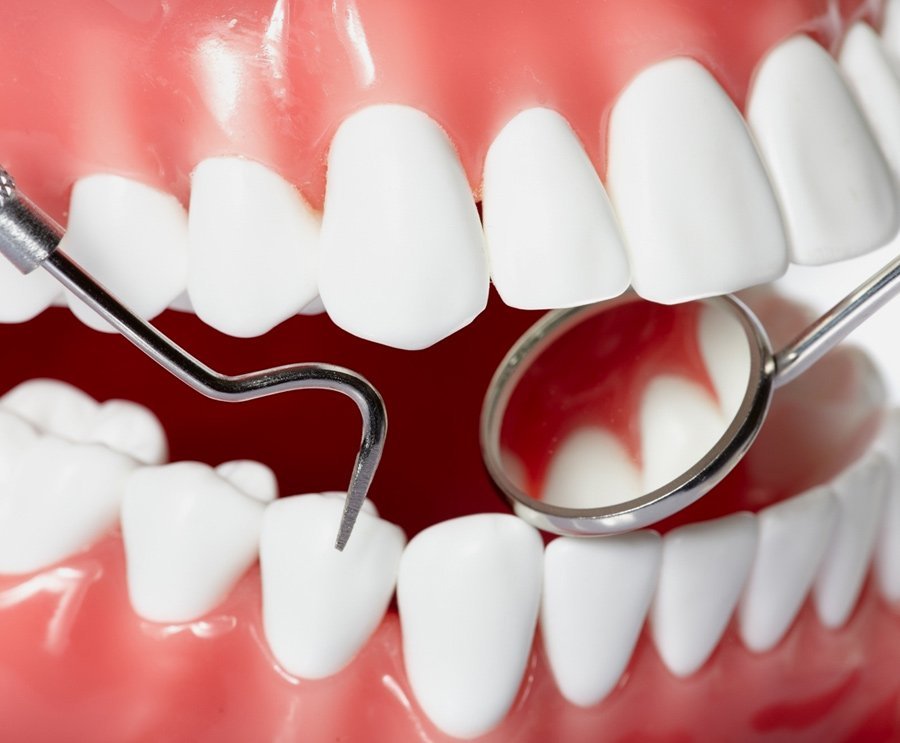
 The branch of dentistry that examines the healthy and unhealthy states of the tissues in and around the teeth, diagnoses and treats diseases of these tissues, and aims to maintain the health of tissues restored to health is called Periodontology. Specialist dentists in this field state that healthy gums are light pink, with a matte, firm surface texture resembling orange peel.
Periodontology is the branch of dentistry that aims to protect the health of the gums and bone, which are the supporting tissues around teeth and implants, to treat them when they become diseased, and to maintain the health achieved after treatment. Many parameters, such as the patient's age, whether they have a chronic illness, and the severity of the disease, are important in restoring lost health. In our clinic, all of these parameters are evaluated individually, and the treatment method is determined as surgical or non-surgical. In addition to classic methods, treatments are completed with the support of lasers and air-flow devices when necessary.
In addition, pink esthetics (gum esthetics), which makes up a large part of smile esthetics, also falls within the scope of periodontology. In our smile, the appearance of our gums is just as important as the healthy and esthetic look of our teeth. For this purpose, the treatment of gum overgrowth and gum recession aims to restore health to our patients while also bringing back lost esthetics.
So, What Causes Gum Diseases?
The first factor behind tooth decay and gum disease is failing to clean the teeth regularly and properly. Microorganisms that accumulate where the gum meets the tooth and between the teeth form deposits called microbial dental plaque. When this plaque is not cleaned, it leads to tooth decay and, as a result, gum disease. To prevent this, people should clean their teeth regularly and use dental floss to remove food debris left between the teeth.
How Is Gum Treatment Performed?
Periodontal treatment aims to heal the disease and damage in the patient's soft and hard tissues. Therefore, in the first stage of treatment, the dentist cleans the plaque around the tooth tissue, completing the first step of treatment. While this procedure is an effective solution for mild gum inflammation, in advanced inflammation it serves as the preparation stage for the periodontal surgery to be performed. Conditions requiring periodontal surgery, such as gum recession, gum overgrowth, and gaps forming between teeth and gums due to jawbone loss, are treated with a surgical procedure in which supporting biomaterials such as bone powder and membranes are used. If the disease affects only the gums, the overgrown gum tissue is trimmed and removed. However, if the disease has reached deeper tissues and caused bone loss, the gum is lifted, the inflamed tissue is cleaned, the bone structure is reshaped, and supporting biomaterials are applied for new bone formation. Then the gum is sutured in a position that covers the bone, and the tissue is left to heal. After the surgery, the stitches are removed within 1-2 weeks, and the patient is called back for a check-up at intervals of 3 to 6 months.
Questions about Periodontology
What causes gum recession?
Gum recession is most often caused by tartar. Sometimes, however, smoking, teeth grinding, or incorrect orthodontic treatment can also be causes. We recommend seeing a specialist to determine the exact cause.