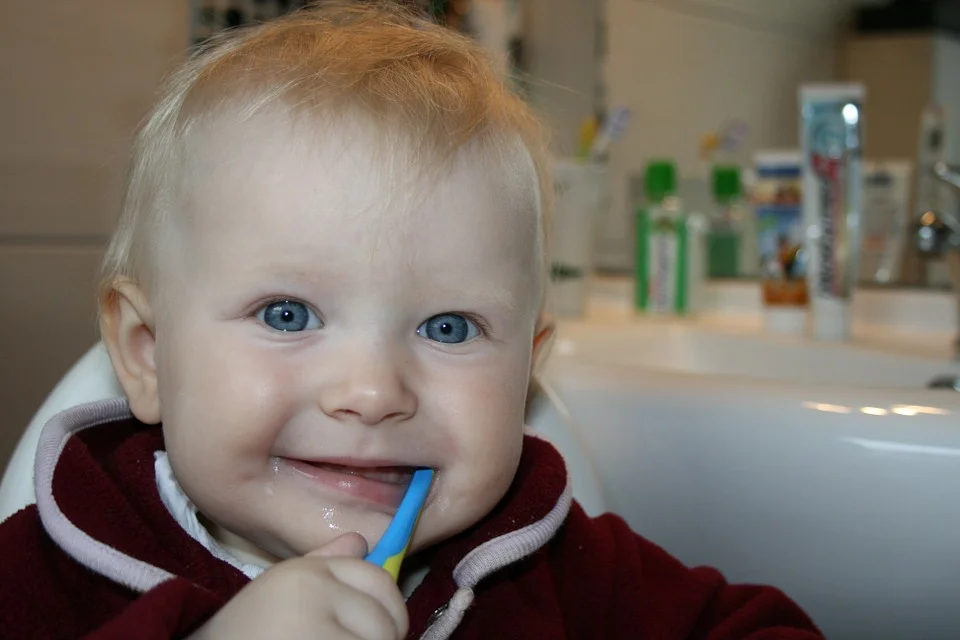

Your baby's first tooth: what to watch for while a baby is teething and when babies' teeth come in.
Although the teething age varies from baby to baby, in what order do teeth generally come in?
On average, the first tooth appears at 6 to 7 months. Sometimes, however, the first tooth appears as early as 3 months, and sometimes it can be delayed until 12 months or even later. The central incisors come in first, followed by the lateral incisors, the canines (eyeteeth), the first molars and, last of all, the second molars of the baby teeth.
Do eruption times and problems vary by tooth type?
Eruption times vary by tooth type:
Front central teeth: 6-10 months
Lateral incisors (side teeth): 9-12 months
Canines (eyeteeth): 15-21 months
First molars: 13-18 months
Second molars: 24-33 months
The problems are generally the same from baby to baby.
What can happen while a baby is teething?
Babies show certain signs before their teeth come in. The order or form of these signs may vary, but in general teeth start to come in with the same signs in all babies.
Drooling: Many babies start drooling at 2 to 3 months of age. This is normal for babies. Some babies drool a little, others more. A baby who has started teething will drool even more.
Pain: As the emerging tooth presses on the gum, it can cause some irritation in the gum tissue. This leads to pain in babies. The teeth that cause babies the most pain are the molars.
Fussiness: As the pain increases and the tooth gets closer to the surface, fussiness may appear and can continue until the tooth has fully come in. It is a difficult and painful period for babies.
Redness around the cheeks and chin: Because babies drool while teething, many develop redness and chapping on the skin of the cheeks and chin as a result of the drool.
Cough: Depending on how much a baby drools while teething, drool can pool at the back of the throat and cause congestion. Some babies may also turn the cough into a habit during this period because they want attention.
Fever: Some babies run a fever while teething and some do not. Because fever can also be the start and a sign of other illnesses, a baby with a high fever must be taken to a dentist or doctor.
Biting: This is seen in almost every baby. As the teeth come in, the gums itch. To get relief, the baby may bite on anything within reach.
Diarrhea: Because babies produce more saliva while teething, their bowels may work faster. But like fever, diarrhea may not be caused by teething. If a baby has diarrhea that lasts more than a day, the baby must be taken to a doctor.
Loss of appetite: Babies may refuse solid foods during this period. This is normal, and there is nothing to worry about. The baby can get the nutrition they need from liquids. Their appetite will return once the tooth has come in.
Sleeplessness: Because of the pain they feel while teething, babies may have trouble sleeping at night. In this case the mother can feed the baby a liquid food or nurse the baby. The baby may calm down this way.
Ear rubbing and pulling: Because of the pain they feel while teething, babies may feel pain in their ears and rub them. However, this movement can also be the start of an ear infection, and a visit to the doctor may be needed.
Bleeding gums: Because the tooth presses on the gum as it comes in, some minor bleeding is normal. This bleeding can show up on the gum as bluish spots. Placing an icy piece of cotton on the gum can soothe it.
What can be done to comfort a baby while teething?
Moisturizing creams can be applied to redness on the baby's face.
Cold foods can be given. Fruit purees may seem more appetizing to the child.
By giving more water and watery drinks, you can replace the fluids the baby loses during diarrhea.
To ease the pain in the gums, you can give cold, firm fruits. This can relieve the pain.
You can buy teething rings sold on the market for the baby to chew on. If you keep them in the refrigerator before giving them, the baby will feel more relief in the gums.
Does nursing soothe a baby during teething? What are its positive effects?
Breast milk has a healing effect on the mouth and gum tissue. A baby who nurses at the breast uses 60 times more energy than a bottle-fed baby, so the jaw muscles become stronger. Teeth that come in on a properly developed jaw are straighter and healthier.
Do all babies show the same problems?
Generally, the same problems appear. Drooling, fever, fussiness, itchy gums and sleeplessness are the common ones.
What should families pay attention to so they do not confuse health problems during teething with other illnesses?
Because teething is very common and fever, diarrhea and fussiness are also frequently seen, they can often show up at the same time. Teething may not cause these symptoms. It is more likely that another illness is causing the fever, diarrhea and fussiness. If there are other symptoms that worry the parents, it is worth seeing a doctor. It should not be assumed that the problem comes from teething alone. Teething is not an urgent reason to see a doctor. However, if families think that there is another problem besides teething, they must see a specialist. A routine checkup with a dentist can take place after the first birthday.
If only the 4 front teeth of a baby have come in, what should be done about cleaning and care, or should anything be done at all?
Cleaning should begin as soon as the baby's first teeth are visible in the mouth. After breakfast in the morning and before bedtime at night, it is appropriate to wipe and clean the teeth (at least their chewing surfaces) with a clean cloth or gauze moistened with water.