What are wisdom teeth? Do wisdom teeth have to be removed?
What are wisdom teeth?
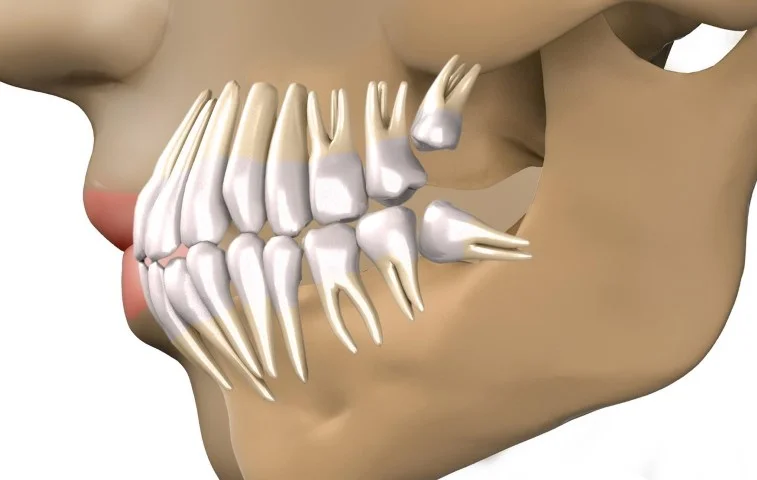
Wisdom teeth are the third molars, located at the very back of the dental arch. These teeth, which usually erupt in the twenties, often erupt only partially or remain impacted within the jawbone because of lack of space in the jaw, a deviation in the eruption position or the bone density of the area.
Does every wisdom tooth have to be removed?
NO. Wisdom teeth that have fully erupted in the mouth, can be cleaned easily and have no deep decay do not need to be removed. However, wisdom teeth that cannot be cleaned easily with floss or a toothbrush, that have decay that cannot be treated, or that erupt toward the cheek or tongue and cause the person to bite their cheek or tongue involuntarily need to be removed.
Does every impacted wisdom tooth have to be removed?
NO. However, partially erupted wisdom teeth cannot be cleaned easily, so they can decay readily and cause bad breath. Wisdom teeth that remain completely within the bone and cannot erupt may lean on the roots of the second molar next to them and damage that tooth over time, or sometimes form a cyst around themselves. Teeth of this type that become infected and cause pain or an abscess must be removed immediately; if they cause no problem, they should be kept under observation by your dentist and removed if necessary.
What should be done after a tooth extraction?
The gauze placed over the extraction site is there to stop the bleeding. Therefore, you should bite on the gauze for half an hour and avoid spitting frequently. In addition, take care not to consume hot food and drinks, alcohol or cigarettes for 24 hours. On the night after the extraction, sleep with your head raised on a high pillow, and never use aspirin or similar medications as a painkiller; use only the medications recommended by your dentist. If a surgical or difficult extraction was performed, ice should be applied intermittently to the outside of the area. Ice should not be applied directly to the skin.
What should be watched for after a tooth extraction?
If you have a high fever, bleeding that does not stop, a bad smell, or painful redness and swelling after a tooth extraction, contact your dentist immediately.
If, 4-5 days after the extraction, symptoms such as blood mixed with saliva, swelling and difficulty opening your mouth continue, contact your dentist immediately.
Is every swelling or color change that appears in the mouth, on the tongue, cheek, under the tongue or on the palate a dangerous disease?
NO. The mouth is one of the first places where the early signs of many conditions in the body appear. Therefore, such formations should be monitored, and if they show signs of a serious condition, treatment should begin without delay.
What should be done if there is a blow to the mouth, jaw or face area?
If there is no brain injury, the patient should be referred to an oral and maxillofacial surgeon on suspicion of a fracture in the bones of the mouth, jaw and face. The necessary radiological examinations should be performed, and if there is a fracture in the jaw, it should be treated without delay.